
Thundermaker Offers Culturally Grounded Path to Recovery
Hocak Worak, the Ho-Chunk Nation newspaper, put Thundermaker on its front page. Kaili Berg’s story on a Native owned treatment center where ceremony is treatment, reprinted with permission.
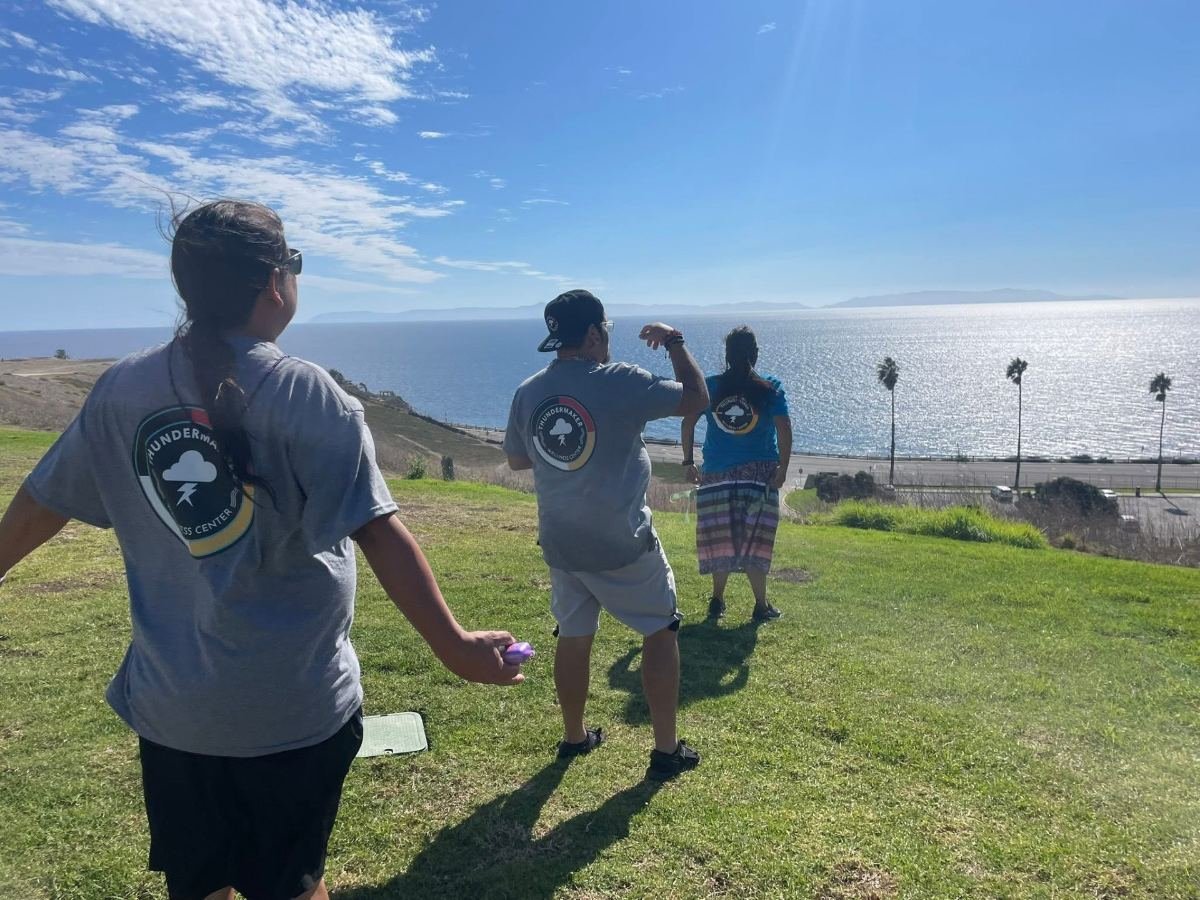
This story ran on the front page of Hocak Worak, the newspaper of the Ho-Chunk Nation, in September 2026. It is reprinted here with permission. Read the original at hocakworak.com.
By Kaili Berg, Hocak Worak
For people arriving at Thundermaker Wellness Center, treatment begins with being welcomed as a relative rather than processed as a client.
Located in Prescott, Arizona, Thundermaker is a Native-owned, licensed dual-diagnosis treatment center serving Native people with substance-use and mental-health conditions. Its program combines clinical care with Indigenous culture, ceremony and community.
Relatives arriving from other states are picked up at the airport and brought to the center, where staff assess their behavioral health and medical needs. Those requiring detoxification are first connected with a nearby partner facility.
Relatives then move into one of three shared homes maintained by Thundermaker. The homes feature Native artwork and communal spaces intended to feel less institutional than a traditional treatment facility.
Arrow Funmaker and Hunter Thundercloud, both Ho-Chunk, co-founded Thundermaker. Funmaker said the term “relative” reflects the community they are working to build.
“We’re creating a community here, like an old village style,” Funmaker said. “Everybody here is equal, and we’re all going to be better people.”
The need for treatment remains urgent. According to the Centers for Disease Control and Prevention, non-Hispanic American Indian and Alaska Native people had the highest age-adjusted drug overdose death rate of any racial or ethnic group in 2023, at 65 deaths per 100,000 people.
In Wisconsin, the Department of Health Services reported 85.1 drug-poisoning deaths per 100,000 American Indian and Alaska Native residents in 2021, compared with 27.2 among white residents.
A typical day at Thundermaker begins with relatives making their beds, preparing meals and eating together. They generally arrive at the center around 9 a.m. and greet one another, sometimes using introductions in their tribal languages. Cedar, sage or sweetgrass may be used before the day’s activities begin.
Mornings are generally dedicated to clinical group sessions. Afternoons may include individual counseling, case management, cultural activities, vocational training, hiking or fishing. Relatives also lead peer groups and support one another.
Thundermaker offers intensive outpatient treatment, counseling, psychiatric support, medication management and case management. Each relative receives an individualized treatment plan addressing substance use and co-occurring mental health needs.
The center also offers educational and vocational opportunities. Some relatives have enrolled at Yavapai College, while others receive construction and job training.
Thundercloud said the goal is to address the issues underlying addiction while helping relatives develop the stability and skills needed after treatment.
“We don’t want people to only think of themselves as addicts,” Thundercloud said. “Let’s figure out what the core issues are.”
Cultural programming is incorporated throughout treatment rather than treated as an occasional activity. Relatives participate in weekly sweat lodge ceremonies and may learn songs, work with traditional medicines, make beadwork and regalia, prepare Indigenous foods or attend powwows and gatherings.
“Ceremony is treatment. Culture is prevention,” Funmaker said.
Although some ceremonies offered at Thundermaker are Lakota-based, Thundercloud said the purpose is not to lead every relative toward the same traditions. Instead, the center introduces relatives to ceremony and encourages them to reconnect with their own nations and teachings when they return home.
Funmaker said many relatives arrive without access to elders, language speakers or cultural teachers. Thundermaker gives them space to ask questions and learn without being judged for what they may not know.
“We can’t truly learn if we don’t have a sober mind,” Funmaker said.
A Hopi relative who has spent the past year at Thundermaker described the experience anonymously as a journey of growth and healing.
“I chose to come to Thundermaker Wellness Center because I wanted a place where I could continue my healing and recovery while also connecting with culture, community and spirituality,” the relative said. “I believe recovery is more than just staying sober, it’s about healing the mind, body and spirit.”
The relative said traditional and agricultural programs, counseling, wellness practices and group support helped them work on recovery in different ways.
“Group support has also helped me realize that I am not alone, and that healing can happen through a connection with others,” the relative said.
Preparing relatives to return home begins before they leave. Staff members help connect them with counseling, recovery meetings, behavioral health providers, sober housing and other resources in their communities.
Treatment length depends on each person’s needs. Thundermaker leaders said they generally recommend at least three to six months of intensive treatment, followed by longer-term housing, employment or educational support when needed.
“What we’re doing isn’t curing anyone,” Thundercloud said. “But if you plant good enough seeds, they’ll be able to recover.”
Ho-Chunk citizens may contact Thundermaker directly to inquire about treatment.
Center leaders emphasize that Thundermaker is a licensed treatment facility and encourage interested tribal members to ask whether it is available as a treatment option.
For more information, contact Thundermaker Wellness Center at (928) 531-1930, email admissions@thundermakerwellness.com or visit www.thundermakerwellness.com.
A note from Thundermaker
Thundermaker Wellness Center is a Native owned and operated addiction treatment center in Prescott, Arizona, licensed by the Arizona Department of Health Services and a confirmed IHS PRC provider for the Nashville Area. If you or a relative are ready to talk, our admissions page explains how the first call works and how treatment gets paid for, including how IHS PRC may pay. Read more about Thundermaker and our Cultural and Traditional Program, or call (928) 531-1930, any hour.
Premier Indigenous Owned Addiction Recovery Center for Natives
How Thundermaker Wellness Center began, and why a Native owned and operated addiction treatment center in Prescott, Arizona puts ceremony, community, and clinical care in the same place.

We are the premier Native-owned and operated behavioral health center providing American Indian and Alaska Native people with high-quality, evidence-based treatment and recovery programs. We braid cultural and traditional practices with modern methodologies, focusing on treating the whole person to support long-term recovery.
Weaving evidence-based programs with culturally infused practices
Here at Thundermaker, we provide a unique, but ancient approach to addiction and mental health by integrating diverse treatment models into our programs while also integrating traditional Indigenous teachings to ensure that the needs of all our Indigenous clientele are met. To achieve this, our skilled staff employs a combination of evidence-based practices and integrative therapies, providing clients with cutting-edge therapeutic interventions that enhance the likelihood of improved treatment outcomes, recovery, and overall wellness. As the nation’s first and only all-indigenous recovery center, Indigenous culture and beliefs are at the center of our programs and serve as the beating heart of the Thundermaker Wellness Center
Native American individuals struggling with addiction face barriers to accessing effective care, often due to a lack of treatment programs that integrate traditional healing practices with modern therapeutic approaches. This absence of culturally-braided support leads to higher relapse rates, incomplete recovery, and a disconnection from cultural identity, which is central to the healing process for many Native American individuals.
Thundermaker Wellness Center aims to address the significant gap in culturally sensitive and holistic substance abuse treatment for Native American communities.
The program is staffed by licensed therapists, trainers, and cultural experts. We partner with local organizations and tribal leaders to provide additional resources and support.
Evidenced-based programs
Evidence-based programs are interventions, practices, or policies that have been scientifically tested and proven effective through rigorous research and evaluation. These programs rely on empirical evidence to demonstrate their success in achieving desired outcomes. They are often used in fields such as education, healthcare, social services, and criminal justice to ensure that resources are being used effectively and efficiently.
The key characteristics of evidence-based programs include:
Research and Evaluation: They are grounded in systematic research and have been evaluated through controlled studies.
Replicability: They can be consistently replicated in different settings with similar results.
Effectiveness: They have demonstrated positive outcomes and benefits for the target population.
Continuous Improvement: They are regularly updated and refined based on new evidence and feedback.
By implementing evidence-based programs, organizations can make informed decisions, improve service delivery, and achieve better outcomes for individuals and communities. Here at Thundermaker, we make sure to use these best practices when treating our relatives. We invite you to visit the page below to learn more about how we use these practices in our treatments.
Culturally-driven psychotherapeutic programs:
Sweat Lodge
The Sweat Lodge has been practiced by many Indigenous tribes across Turtle Island. The Sweat Lodge ceremony has been used for generations as a mental, emotional, physical, and spiritual well-being practice that incorporates traditional knowledge with spirituality. On top of being a part of native spiritual practice, it has recently been accepted by certain insurances as a form of mental health therapy.
Food Sovereignty
Connection to nature and the earth is a cornerstone in Indigenous culture. Modernly known as horticulture therapy, food sovereignty practices help nurture one’s physical, spiritual, and mental well-being while providing a connection between traditional native cultural practices and proven behavioral health therapy.
Traditional Medicines/Practices
Our Indigenous traditional medicines offer a holistic approach to addiction and recovery for Indigenous clients while providing a space that is inclusive of all nations. Our staff is made up of culture-practicing Indigenous people whose perspective and vision come from lived experience.
How we got started
Founded in 2024, the Thundermaker Recovery Center was put together based on the lived experience of founders Hunter Thundercloud and Arrow Funmaker while working together in the addiction recovery field as Indigenous people. They recognized the lack of culture-centered addiction programs, as well as the lack of culture-practicing Native people at the heart of these recovery centers that often treat many Native American clients.
By establishing this treatment center, they found a way of reviving a traditional way of life while also providing treatments that cater specifically to Native people. This program is a modern embodiment of the values that have sustained Indigenous communities for generations. Here, every client becomes an integral part of a larger circle, embraced as relatives united on a shared path toward healing and growth
Much like a traditional community, the treatment center offers holistic care addressing mental, emotional, physical, and spiritual needs. Elders and cultural practitioners provide guidance by sharing wisdom and traditional practices. Shared meals, prepared with Indigenous foods and ingredients, offer opportunities to reconnect with heritage while nourishing both body and spirit. The land itself also plays a role in the healing process, reminding us of our place in the greater circle of life.
By fostering a sense of belonging, we address individual challenges and rebuild the foundation of community strength. In this space, clients can shed the burdens of isolation and rediscover their purpose as interconnected members of a greater whole. Just as our ancestors once did, we are creating a circle where healing, support, and belonging thrive, ensuring that no one walks their path alone.
Contact Us
If you are interested in working with us, have any questions, or want to know more, please contact us by filling out this form, or join our mailing list for updates, future events, or programs. CONTACT admin@thundermakerwellness.com
Pinagigi/Thank you (Ho-Chunk)
Ahehee/Thank you (Navajo)